 By Mary Reid Barrow
Photos by Brent James
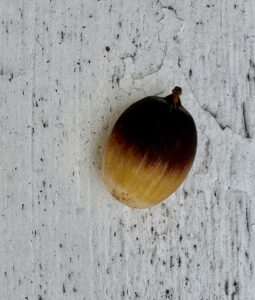
Walk under the live oaks along the Feeder Road at the North End and you can’t miss the noisy crunching of acorns underfoot and their pinging as they fall on car rooftops and into truck beds.
Curious dogs are snatching acorns up for munching, much to their owners’ dismay.
And the squirrels are going crazy trying to gather all the acorns and bury them quick before something, like the dogs, or in the wild, deer get them first.
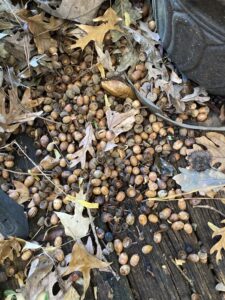
When acorns drop en masse in the fall, it’s called a “mast year.” This is one of those years and the tough nuts have been dropping all over town, said Brent James, LRNow’s Oyster Restoration Manager and founder of its Notable Tree Program.
Though “mast” sounds like it should come from the word, mass, it doesn’t. It comes from “maest” an Old English word that means tree nuts and fruits. In those days “maest” was used for animal feed.
Brent lives on the Lynnhaven River and you might say he has been awash in acorns. Three species, northern and southern red oaks and white oaks, grow in his yard.
The evidence is strewn across his decks and walkways. Some of these acorns are so big they are more apt to be ankle twisters underfoot, unlike the little live oak crunchers that are easily smashed.
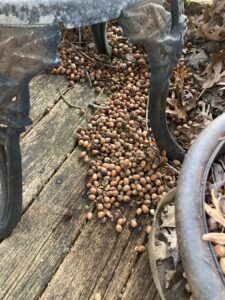
“This year is indeed a mast year as my photos illustrate,” Brent said. “I’m estimating that my oaks are producing approximately 8-10 times the number of acorns in a normal year!”
Mast years occur every 3-6 years when oak trees of all species appear to be in cahoots with one another to produce an enormous number of acorns, he explained.
Botanists don’t know why this occurs, he added. They theorize that this occasional over production is nature’s way of making sure the squirrels and the deer don’t get all the acorns and leave some behind to make future generations of trees.
“The intriguing part for me is how the trees synchronize their production of acorns,” Brent said.
“It seems impossible that they actually communicate with each other, but that is surely the effect!”