By Mary Reid Barrow
Monarchs are on the move.
The tiny, winged critters are flying with intent focus south to Mexico, and the butterfly highway map includes route 13 down the Eastern Shore to Route 60 through Virginia Beach.
Monarch migration south is one more big reason for keeping our drought-stricken gardens going through the fall. Gardens to monarchs are like gas stations, except they are serving up high-octane nectar to fuel a road trip of another kind.
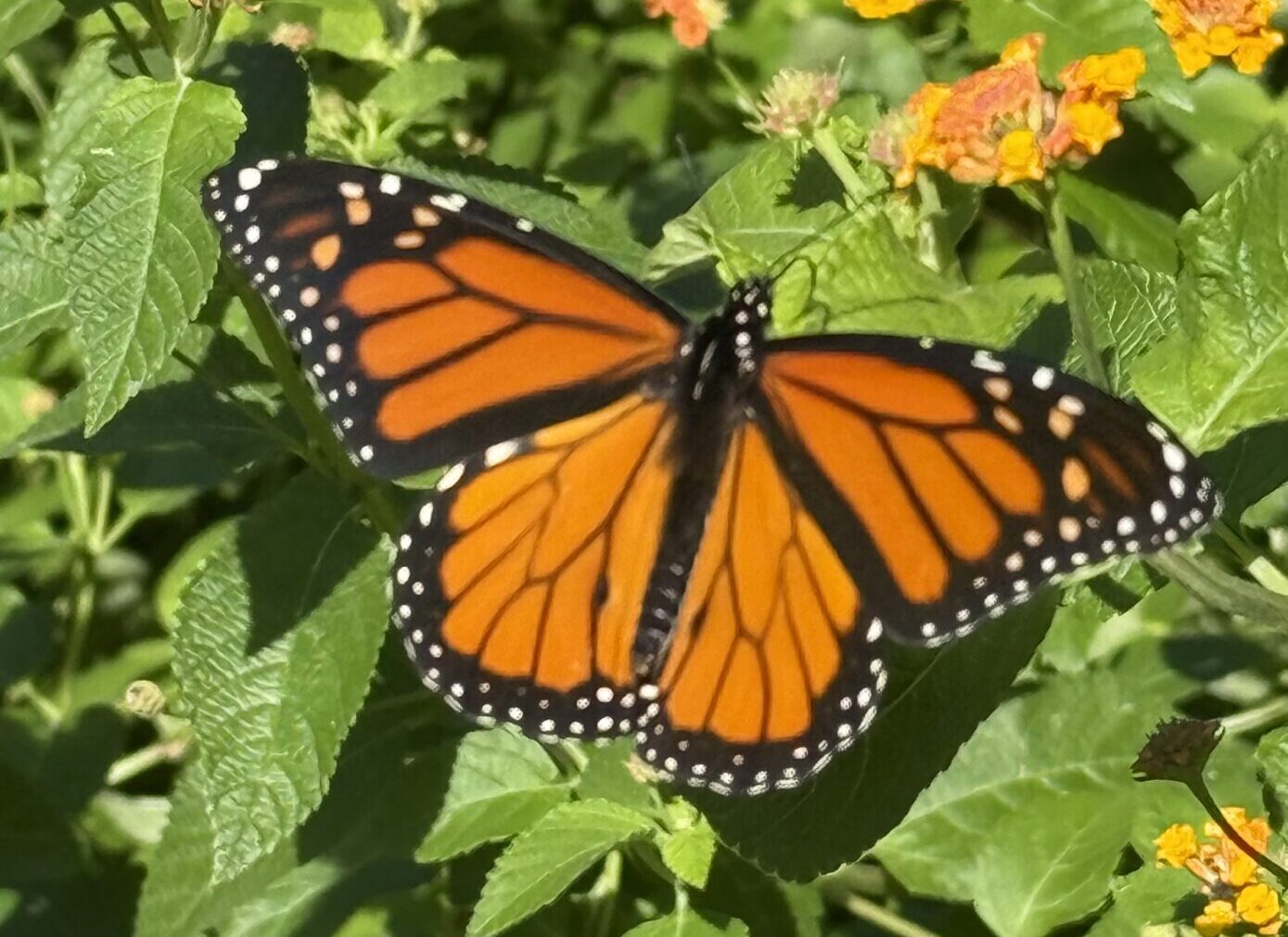
Judi Knouf snapped the beauty above the other day as it gassed up at the 87th Street Community Garden at the beach. Neighbors along 87th street and nearby feeder road maintain the garden at the beach entrance.
“I’ve seen a ton of them on that lantana,” Judi said. She is the top “gas station attendant” heading up the maintenance of the neighborhood garden.
Gardens along the Oceanfront and those inland in Virginia Beach are vital for the butterflies that make the long and treacherous trip down the coast to mountains in Mexico where they hibernate for the winter, hanging in large groups from trees.
Other than non-native lantana, monarchs nectar on natives such as goldenrod, asters, Joe Pye weed and coneflower. And more and more of them have been showing up at local gardens recently.

Another beauty was snapped by Maurice Cullen, founder of the Virginia Beach Middle School Butterfly Garden. Though this butterfly was in Maurice’s own yard in the Kings Grant area, monarchs make the Middle School garden a regular refueling spot.
Satoko Moore in Cypress Point reported finding a tired monarch on the ground in her garden and picked it up and put it on a nearby milkweed plant. She also put out a shallow dish of sugar water, just in case.
“I don’t know if this will help or not to give her energy enough to keep going on her migration,” Satoko said.
These monarchs of fall are basically juveniles, explained Karen McCurdy, co-president of the Butterfly Society of Virginia. They lack a reproductive hormone and cannot mate.
“This enables them to live six to eight months instead of the average month lifespan of the preceding three to four generations of monarchs we have here in Virginia from spring through summer,” Karen said.
As the weather warms up in Mexico, the hormone is activated in the juveniles which allows them to mate as they head back up the East Coast. The females lay eggs, and the journey back home is left to the young.
Meanwhile now these juveniles are moving south. I have heard stories of motorists seeing monarchs from their car windows as they cross the Chesapeake Bay Bridge Tunnel. As the bridge-tunnel builders knew, these young monarchs instinctively know where the shortest distance between two points is!
I have seen them flying down Shore Drive in a small line. Their wings flap with determination. They don’t flit around as the monarchs of summer are wont to do.
If this amazing life cycle intrigues you, the Butterfly Society of Virginia will present a program on monarch migration at 2 p.m. Sunday, October 18, at the Law Enforcement Training Academy, 411 Integrity Way. Dr. Ray Moranz, a pollinator conservation specialist, will speak on monarch migration pathways. The meeting is free and open to the public.