by Mary Reid Barrow
WAIT!
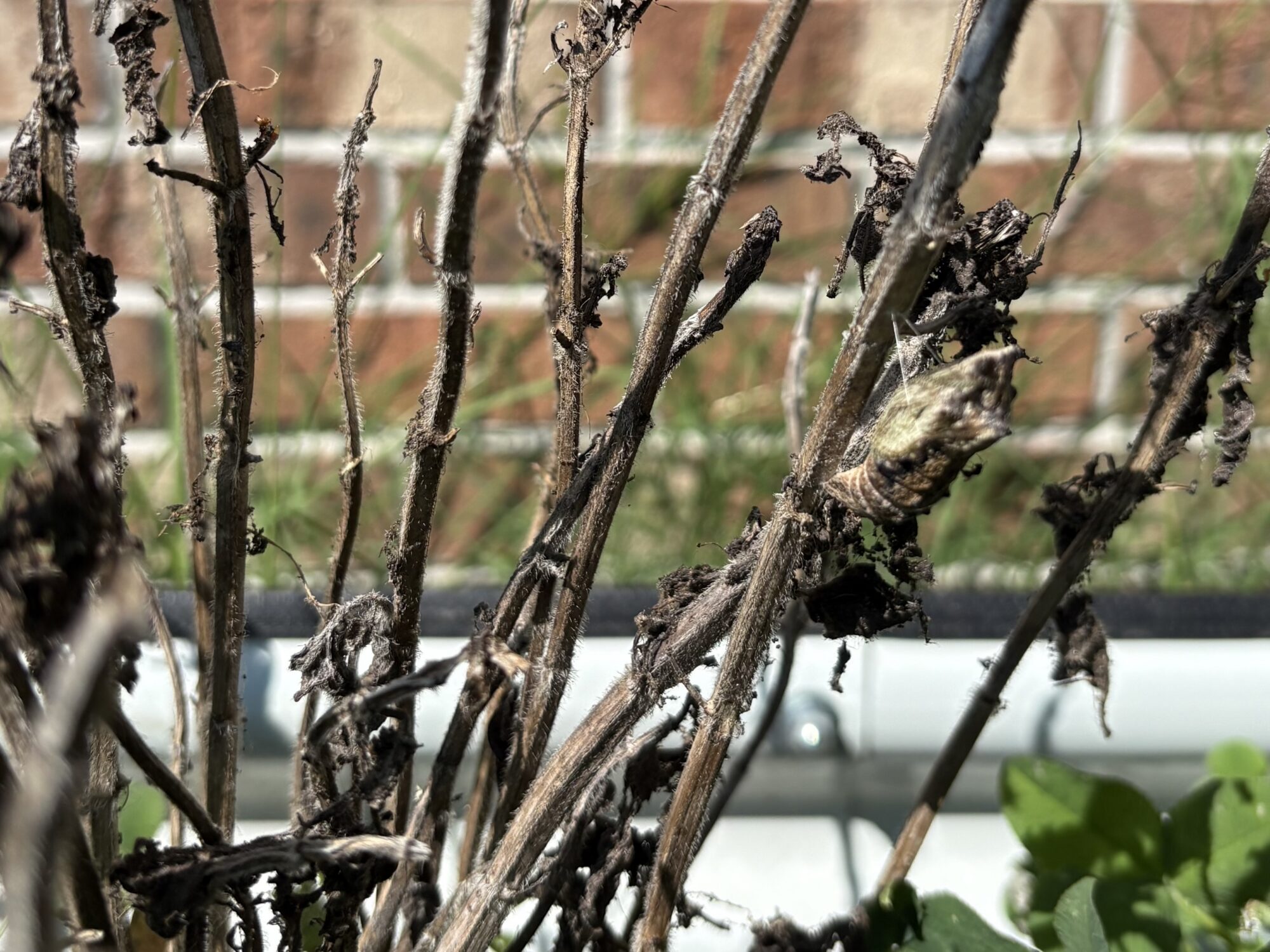
Your garden might look like this at first glance.
But look again!
That thick brown shape that looks like a dried up leaf is really a black swallowtail butterfly chrysalis that LRNow Assistant Director Cristin Pullman photographed in her yard the other day.
A lot of life is still left in our drought stricken gardens that we don’t see for the mess. Most of us are just aching to start weeding.
DON’T!
Cristin was surprised to photograph the brown chrysalis when just the day before, she photographed this caterpillar in the same spot.
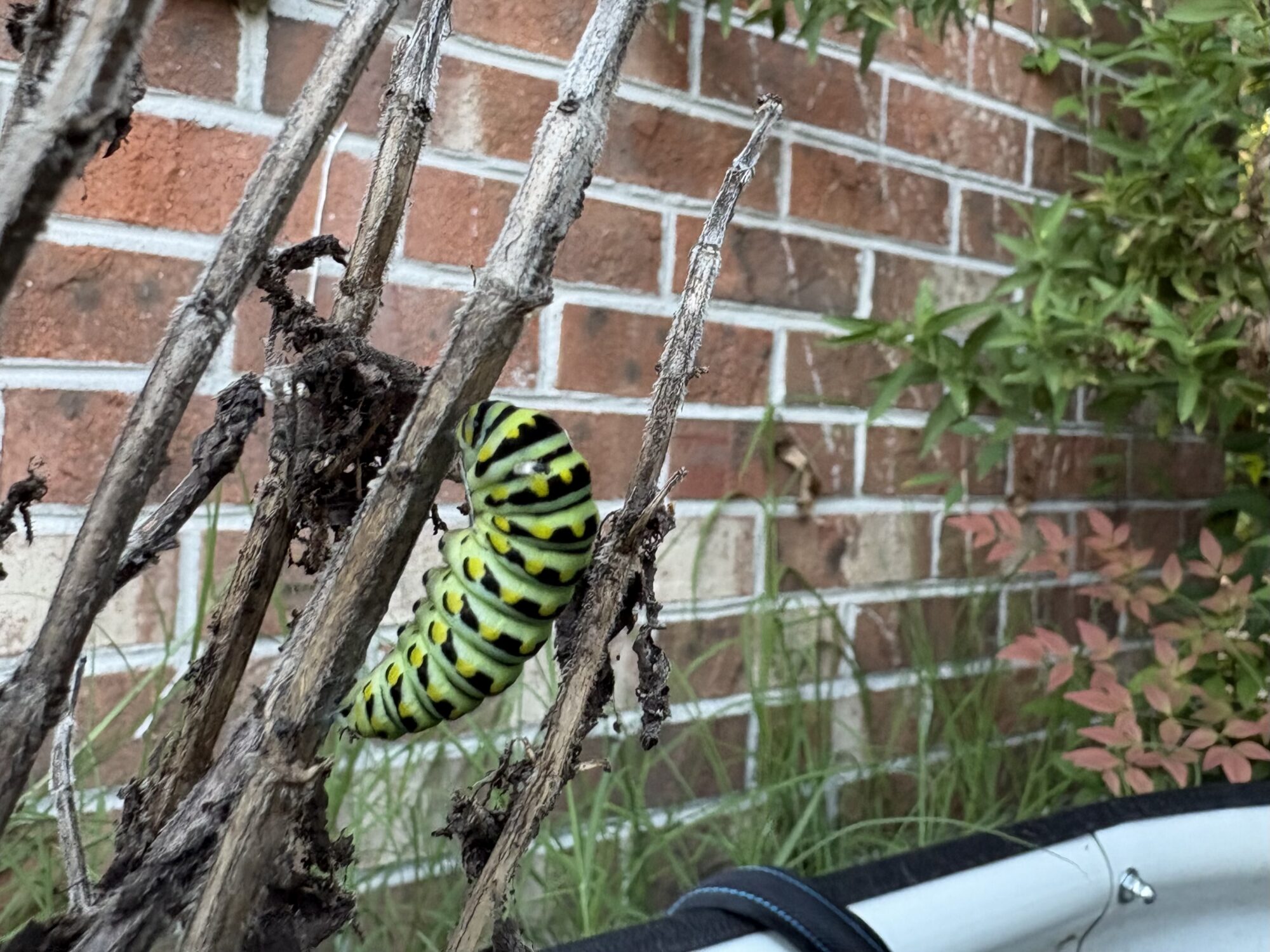
The caterpillar had moved from munching on its host plant, parsley, to a more substantial bee balm stem where it could attach its new home.
“That brown chrysalis is a good reminder to people to hold off on the yard cleanup,” Cristin said. “You may not know what is hiding in there!”
With our dry summer followed by the recent, windy dry-ish, and prolonged Nor’easter, flowers, grasses, trees, anything green, are suffering from lack of water.
But that does not stop butterflies and caterpillars from moving on with their life cycle.
Nor has the drought stopped flowers, as thirsty as they also may be, from going to seed.
Dead looking flowers are full of healthy seeds that birds depend on for food in fall and winter and are a gift of new plants in the garden in spring.
Beauty is in the eye of the beholder and this faded Joe Pye weed blossom, is an eyesore except to hungry birds and gardeners looking to the future.
So, if you must clean up your garden, at least save the stems you cut, said LRNow Conservation Landscaping Manager Terri Gorman. Lay the branches in a brush pile somewhere in your yard where chrysalises can be safe, butterflies can emerge and other critters can take shelter.
Even better, tie cut stems of plants, seed heads and all into a bunch and hang the bunch from a fence where birds can also safely access it, Terri suggested.
Best of all, just WAIT!