By Mary Reid Barrow
The ospreys’ ears would have been burning had they realize the excitement they caused by returning to this puny nest that’s east of the bridge along the trail to the Narrows at First Landing State Park!
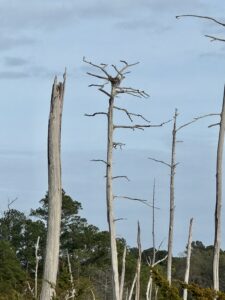
Friday, I had walked almost to the bridge, when I saw a mother and two sons, all smiles, who told me they saw an osprey perched next to the nest in the skinny tree snag in the wetlands not far off bridge.
Later, I saw a young NATO couple from Finland who were hanging over the bridge railing and eyeing the nest tree.
“An eagle-type!” the husband said, excitedly, as his wife took photos of the big bird sitting next to the nest.
Then I stopped to talk with two young women, binoculars in hand, and we watched his/her mate fly into the nest itself. My imagination took hold and I thought it was the male, just returning from migration, and the female was scolding him.
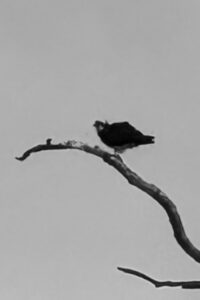
“Honey you are late again this year!” she might have said.
If we had been close up, we could have picked out the osprey female from the male, because he has a white chest but she has brown feathering that’s been described as a brown necklace.
Their nest, small and not very strong looking, has been secure for some reason in the same snag for years. To get a closer view, continue along the trail and stop at the bench dedicated to raptor expert Reese Lukei.
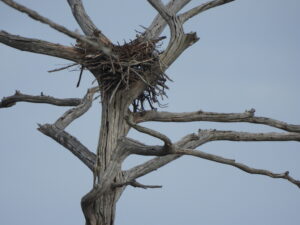
The nest was dubbed “Far East,” by Robert Brown, another avid osprey watcher who’s been keeping track of osprey along this trail for years. He gave practical names to some nests, like “Far East” because you can see it in the east from the bridge and other nests are more whimsical like “Crown Point” or “Shangri-la.”
Robert has named many nests over the years, but sadly, the nests have diminished in this area of the park partially because of a bald eagle pair in the area. Territorial eagles make it difficult for the two species to live closely together.
Still, the trail to the Narrows and wooded wetlands on either side of the road remain one of the best places in Virginia Beach for seeing osprey on foot, because many nesting spots, such as tall pines and the ospreys’ favorite, dead tree snags, are available in the protected park. For the most part these days, ospreys build homes on nesting platforms and buoys out on the water and are mainly visible by boat.
Male ospreys migrate south in mid-summer and leave the females behind to tend to the toddlers until they can fend for themselves and then they also migrate. The adults don’t see each again, usually until early March. So, the osprey watchers on the bridge could well have seen the Far East pair’s reunion.
Reese, who has banded ospreys for year, is still amazed that the big birds return to the same nest every year after months away. Here’s a photo he took while counting osprey out on the river a few weeks ago.
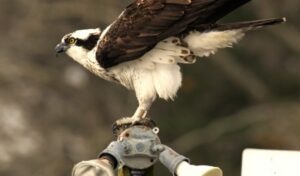
“Just think about the osprey’s GPS system and its timing to return to the same nest after spending 6 months somewhere in South America!” Reese said.
Ospreys have built a calendar into our brains too and we were all looking for the big birds on Friday and the Far East pair surely lived up to our expectations.