
by Mary Reid Barrow
Vultures or buzzards or both?
A couple of you called me out when I used the word “buzzards” in my last Nature Notes. I was referring to the black vultures dining on food bits remaining on our oyster shells at the City’s Resource Recovery Center.
LRNow collects the shells from restaurants, oyster roasts and their shell recycling bins. They are taken to the center where they “cure” for six months or so before going into new oyster reefs. The “buzzards” fly overhead awaiting their job as part of the clean-up crew.
But you were right. They are vultures and not buzzards.
I know in my bird watching head that those big black birds circling overhead when roadkill is around or waiting to clean our oyster shells are vultures. Black vultures have dark gray heads and turkey vultures, red heads.
Why, when I know better, do I look up the sky and easily say, “Look at all those buzzards!”?
It’s always been a word I’ve used. I probably learned it from my father. And from what I’ve learned now, I bet “buzzard” is used colloquially around these parts and in other parts of the country too.
Turns out “buzzard” is the real name for the common European hawk. Its Latin name is Buteo buteo and “buteo” is Latin for buzzards!
We’ve probably been using the word buzzard casually for our vulture sightings since our forefathers arrived in this country. I imagine they looked in the sky and saw all those birds circling overhead and said, “Look at all those buzzards up there!”
Our “vultures” weren’t recognized by naturalists until the 18th century!
Hummingbirds: Regulars or Newcomers?
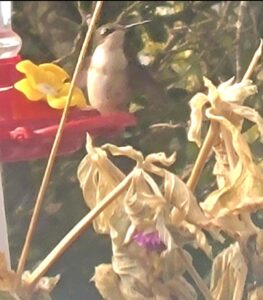
This little hummingbird surprised Cindy Moneta with a Christmas Day visit to her feeder. She has photographed it several times over the holiday!
Cindy had hummer visitors most of last winter too. My neighbor, Jenny Johnson recently told me she doesn’t think her hummers ever left!
I checked in with Angie Henry, manager of Wild birds Unlimited at Hilltop. She thinks that many of the birds, like Jenny’s, that were here last summer just never left.
Angie said that from what she’s seen, climate change is real and that the birds are learning that there’s no need to migrate farther south for the winter.
Winter hummers not only dine at feeders, but as unlikely as it seems, they also are able to feed on winter bloomers such as camellias, hellebores, witch hazel and more, some even with tiny unnoticeable flowers.
In addition, where there are blooms, there are insects that hummers depend on for protein. On warm days insects may even hatch out and provide more food for hungry birds.
If you are like me, though, and can’t stand to think of the birds without our nectar in freezing weather, put out unfrozen nectar at dawn in time for hungry hummers to wake up and feed right away. Hummingbird feeder heaters also are available.
To make things a little easier, sugar water is much less apt to go bad in cold weather, Henry said. Hot weather is what causes sugar to ferment.