By Mary Reid Barrow
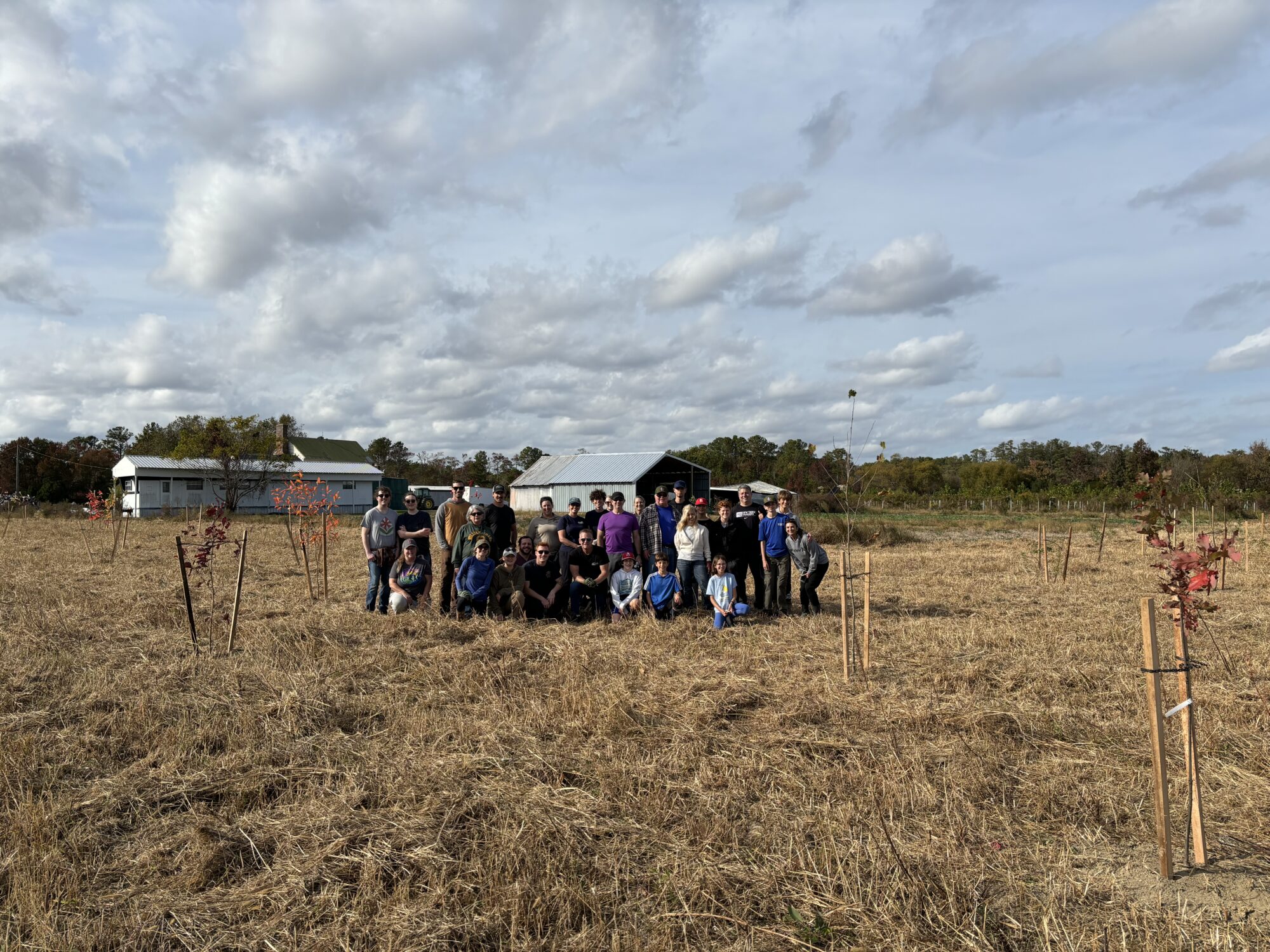
Close to 800 young native trees are growing on former farmland in the Back Bay area this year where they are beginning to slow flooding on the land and reduce pollution draining into Back Bay waters.
The saplings are hard at work, thanks to LRNow volunteers who battled Mother Nature off and on for a year to plant the trees on the property, part of which had been a pig farm and the other, cropland.
Both areas had become too wet to farm. The land was sold to Back Bay National Wildlife Refuge but hog waste and excess fertilizer from the farms was still running off into the bay.
LRNow stepped in to help reforest the area. They obtained funding from a Virginia Trees for Clean Water grant from the Virginia Department of Forestry, said Vince Bowhers, LRNow’s Restoration Manager.
More than 300 trees were purchased with grant funds, and more than 400 were donated by Emerald Forest, a local environmental restoration company, and some trees were salvaged trees from other areas.
Forty-four volunteers and a local contractor, who dug the holes, battled setbacks primarily from the weather for for about a year to complete the planting. Tree planters included LRNow volunteers along with students from the Virginia Beach Public Schools Environmental Studies Program and Boy Scouts with Peter Colucci’s Eagle Scout project. The weather was not their friend.
“If strong winds came from the south, the roads would flood and we would be challenged getting to the sites,” Vince said. “If heavy rain hit, the fields would be too wet to work.”
Many of the trees had to be carried in, pot by pot, from truck to planting locations because the fields were too wet for vehicles. In addition, there is no public access to the properties, and they had to rely on property owners for access.
“In December we had a snowstorm that melted slowly and kept the fields too wet for over a week,” Vince said. “Mother Mature was not always cooperative, but our contractors and especially our volunteers persevered until the job was done.”
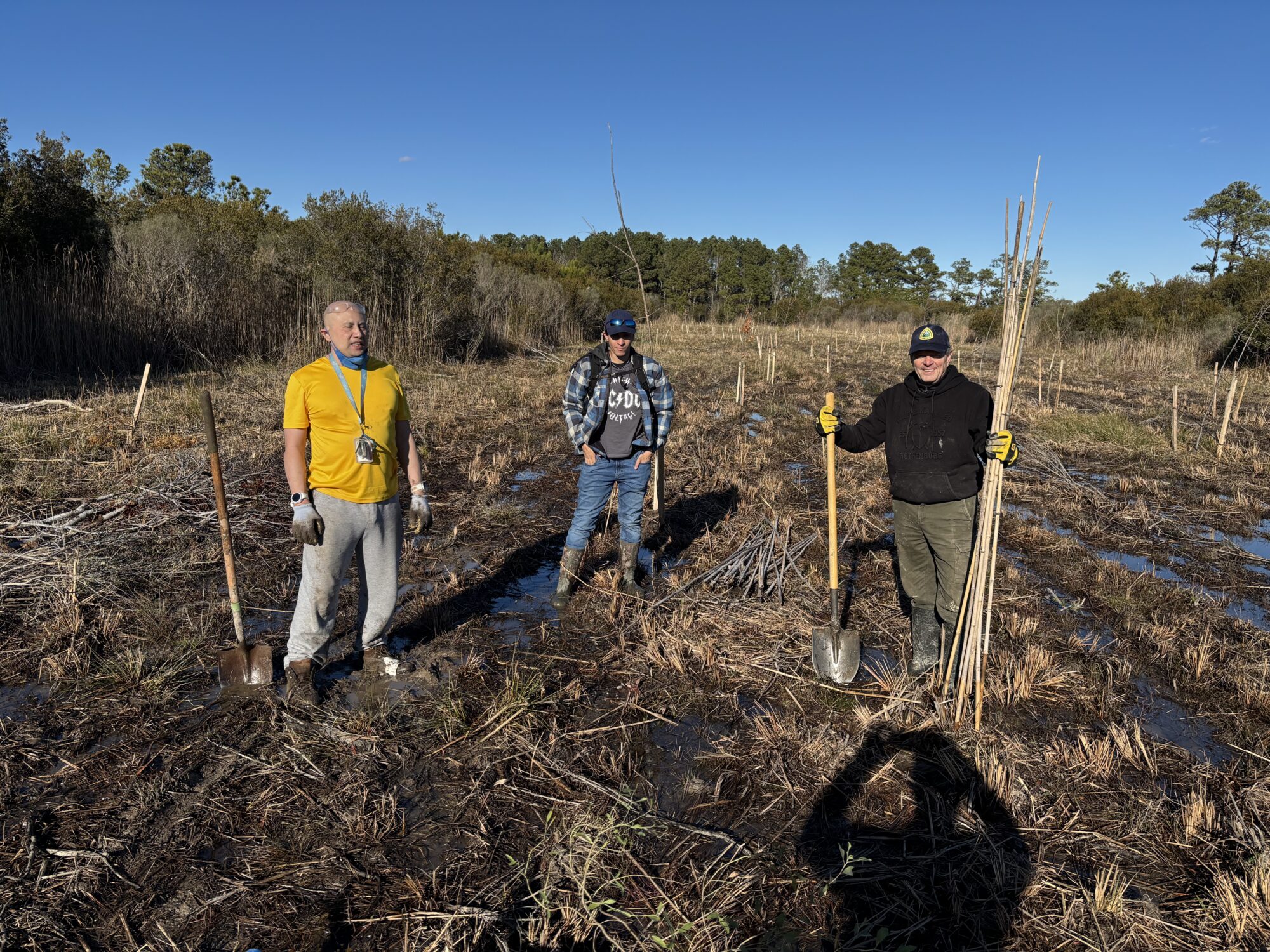
In essence that means that native trees like black gum, sycamore, Atlantic white cedar, bald cypress, white oak, swamp white oak, red cedar, marsh elder and wax myrtle now are beginning to put forth roots and work to protect Back Bay from runoff and pollution.
One volunteer, Sunny Au, is a great example of the hard work and tough conditions that the volunteers coped with, Vince said. Sunny had signed up to volunteer the first of five planting days in December. When he saw Vince was shorthanded, Sunny asked if he could return the next day.
“The next day we worked in a much wetter field and his shoes got soaked and the sole started to separate,” Vince added, “but he persevered and came back with it taped up the next day, and the next day!
“Thanks to Sunny and our other wonderful volunteers, we got the job done,” Vince said. “That is, until spring, when we will be asking our volunteers once again to join us to help maintain this fledgling maritime forest!”