by Mary Reid Barrow
We know the birds and the bees are busy but keep your eyes open for what’s underfoot too.
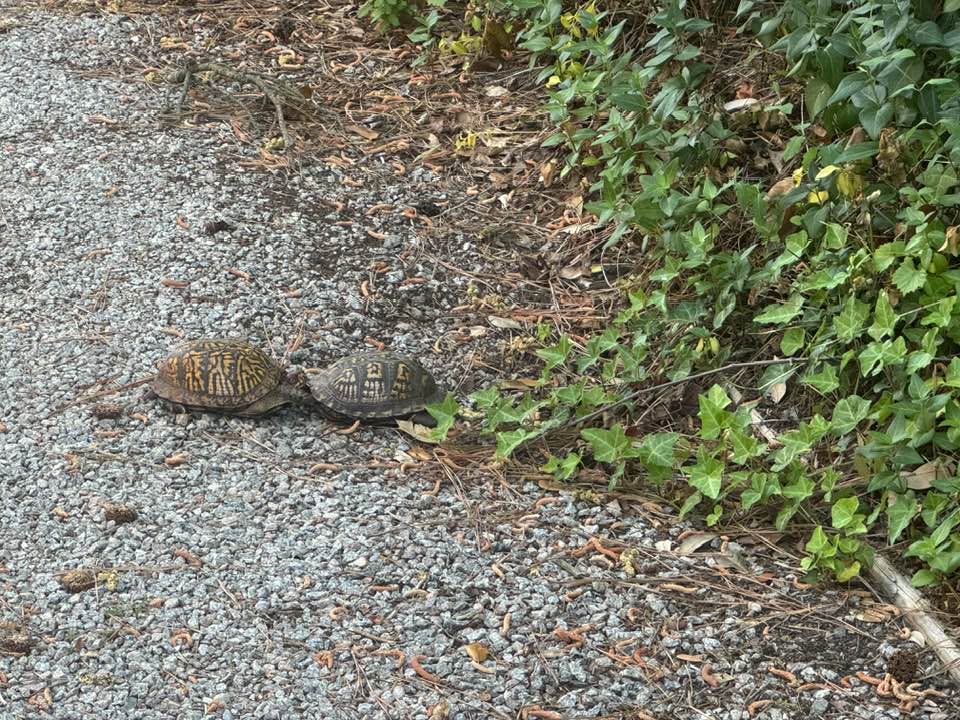
I found a little hanky-panky going on in my driveway the other day and it sure wasn’t birds or bees! Two box turtles were flirting as only box turtles can–just him lumbering after her.
Earlier, I saw turtles mating on the side of the Feeder Road where they stayed for several hours–no worries about a public display of affection.
When I posted the photo of my turtles on my Facebook page, a friend, Gene Owens posted “The Turtle” by Ogden Nash:
“The turtle lives twixt plated decks that practically conceal its sex.
I think it clever of the turtle in such a fix to be so fertile.”
So, keep an eye out for spring visits from boxies, as Randy Keel calls them. He just sent a photo of an early visitor who arrived in his Wolfsnare yard for a strawberry snack.
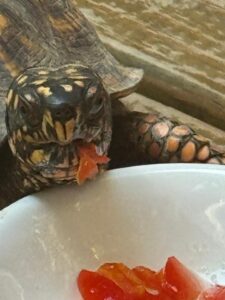
If you see a lone turtle in your yard, be like Randy Keel, and fortify it with a few berries or tomatoes from the kitchen. Box turtles work hard this time of year.
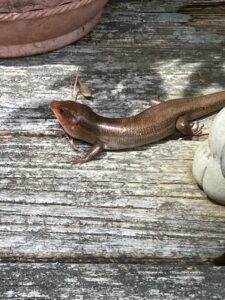
A broadhead skink showing off its red head caught the eye of LRNow’s oyster restoration coordinator Brent James.
The skink flaunts its fiery color for females nearby and as a red flag to other males. Adult males generally are a tan color, but they get attention in mating season with their red heads while females look totally different, somewhat like a muscular oversized, blue-lined skink.
Now for the birds and the bees…Reese Lukei was checking out the yellow-crowned night herons that have returned to their rookery on Bray Road when he saw these two in a nest:
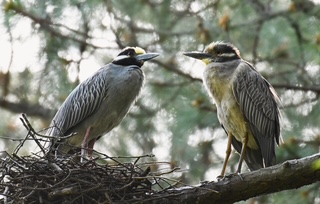
The birds are named for their yellow head feathers that are especially bright in mating season. But this beauty on the right also has a yellow breast. The coloration is called “zanthochromism, a pigment mutation that causes the feathers to have excessive yellow,” Reese said.
I am imagining she’s a she and she is the belle of the ball on Bray Road this spring.
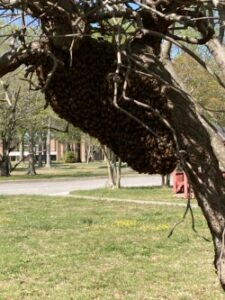
Brent James also found a honeybee swarm in a tree near the chapel at Oceana Naval Air Station. A swarm is led by the old queen bee who has been ousted from her hive by a younger one, Brent explained.
“She takes her loyal subjects (about half the old hive) and departs in a huff to establish a new hive elsewhere,” he said.
“The very best thing people can do, upon encountering a swarm is just leave them alone,” he added. “And don’t molest them in any way.”
The swarm is usually a stopover and lasts only a few days until a suitable location is found for a new hive. The ousted queen and family will move to their new home and all’s well in love and war.