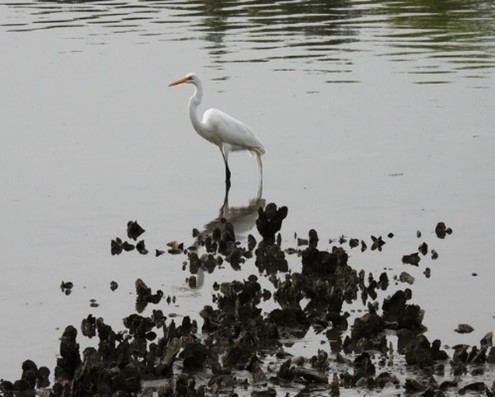
Lynnhaven River NOW supports the proposed Wetland Mitigation Bank project at Pleasure House Point. Wetland restoration at this site has been a part of the plan for Pleasure House Point from the time that the property was acquired by the City.
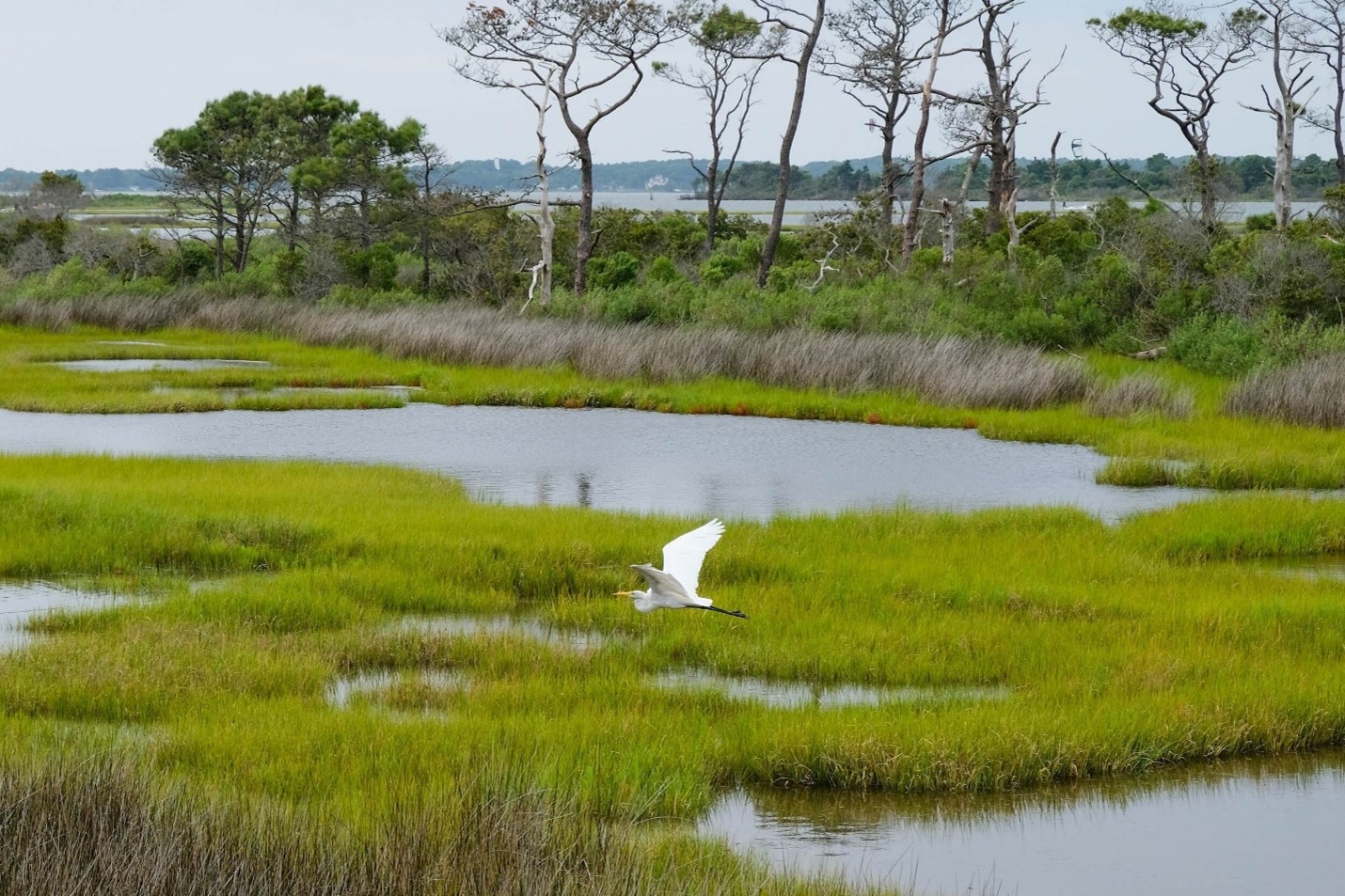
Tidal wetlands are the most threatened marine habitat in the Lynnhaven River system. Much of our wetlands have been lost to decades of shoreline development that hardened the shoreline with bulkheads drowning the wetlands or they were filled and channelized to create neighborhoods. The remaining wetlands, the majority of which are in our system of marsh islands, are highly vulnerable to sea level rise. With no way to migrate landward, it is estimated that we will lose up to 80% of our remaining wetlands by 2100.
Wetlands provide invaluable benefits for both the ecosystem and for human society. They are natural water filters trapping pollutants and improving water quality. They support a myriad of plant and animal life and are critical for biodiversity conservation. They also serve as vital nursery areas for marine species in the river, the Chesapeake Bay, and the Atlantic Ocean.
Humans benefit from wetlands too. They are crucial buffers against flooding: they play a significant role in carbon sequestration; absorb excess rainwater; and reduce the impacts of storm surge. All these benefits help to make the river and our neighborhoods more resilient.
We all wish that this work could be accomplished with less tree loss. But with careful planning, the tree loss can be mitigated, and the wetlands will provide more species diversity and more ecological and water quality value than the sand fill that is there currently. To ensure that the benefits of this restoration exceed the loss of the tree canopy and the disruptions from the construction process, we request that you consider the following items.
- Prior to the beginning of construction, allow LRNow and other interested non-profits to utilize volunteers to transplant appropriate trees in the project area to other areas of Pleasure House Point or to pots for transplanting into other restoration projects in the city.
- Do a thorough inventory of trees with four inch and larger diameter that will be removed, include species and size. These trees should be replaced following the City’s 1:1 replacement policy for all city projects.
- Practice vigilance in the use of silt fences and turbidity curtains to protect the millions of oysters in Pleasure House Creek. Twelve new acres of oyster reef were constructed in the past five years and are thriving with their numbers compounding rapidly. They must be protected.
- As the area leader in sea level rise resiliency work, please carefully plan for predicted sea level rise in the design and construction of this restored wetland area to insure its long-term viability.
- Relocate any identifiable diamondback terrapin nests prior to the beginning of construction and put measures in place to prevent diamondback terrapin from entering the site during construction.
As part of our ongoing water quality monitoring program, LRNow does monthly monitoring in Pleasure House Creek and at the mouth of Crab Creek and Pleasure House Creek. We can provide the water quality monitoring results prior to, during, and following the construction of the wetlands.
In addition, we are interested in collaborating with you to transplant appropriate trees prior to the commencement of construction and look forward to talking with the project managers about starting this work.
The abbreviated public input process on this project has brought two things to light. One, the high level of community investment in Pleasure House Point and two, the lack of understanding in the community regarding the functions and valuable benefits of wetlands. LRNow would like to engage with the Department of Public Works to do periodic public tours of the construction site, as safely concerns allow, as an opportunity for citizens to be informed and learn more about this essential natural habitat.
Thank you for your vision in acquiring the Pleasure House Point property and your commitment to maintaining it as a natural area. We appreciate this opportunity to provide these comments regarding the Wetlands Mitigation Bank proposed for Pleasure House Point.
Karen W. Forget
Executive Director
I know many of you are very interested in the progress of the proposed salt marsh restoration project at Pleasure House Point. In our initial statement on this project, we made a commitment to remove as many of the transplantable trees as possible; to work on a plan to protect the diamondback terrapin; and to monitor runoff into Pleasure House Creek throughout the project. At this time, I would like to update you on the progress that has been made in all three of those areas.
To get equipment to the 12-acre site where the excavation and restoration work will take place, an access road must be built. This will impact some more mature trees than those in the construction area. The access road has been adjusted to avoid some live oak trees that would have been removed.
The students from the Environmental Studies Academy did some excellent work identifying the trees with a 2 inch or larger diameter in the construction area. They found 5,200 trees and identified 78% of them as loblolly pines. The other 22% are a variety of species.
LRNow and City staff worked together to identify trees that were good candidates for transplanting. Over six shifts on three different days, 62 volunteers came out to help dig up and pot the trees that could be transplanted. The 650 trees that are now being cared for and will be transplanted in restoration sites throughout the city including all of the following species: red cedar, black cherry, southern magnolia, sassafras, various oaks including live oaks, wax myrtle, yaupon holly, and Baccharis. We appreciate the tremendous work of the volunteers and are thrilled that many of them took advantage of the opportunity to take a tree home for transplanting in their own yard. In addition to the trees, 225 grasses were also removed and will be transplanted in restoration projects in the city.
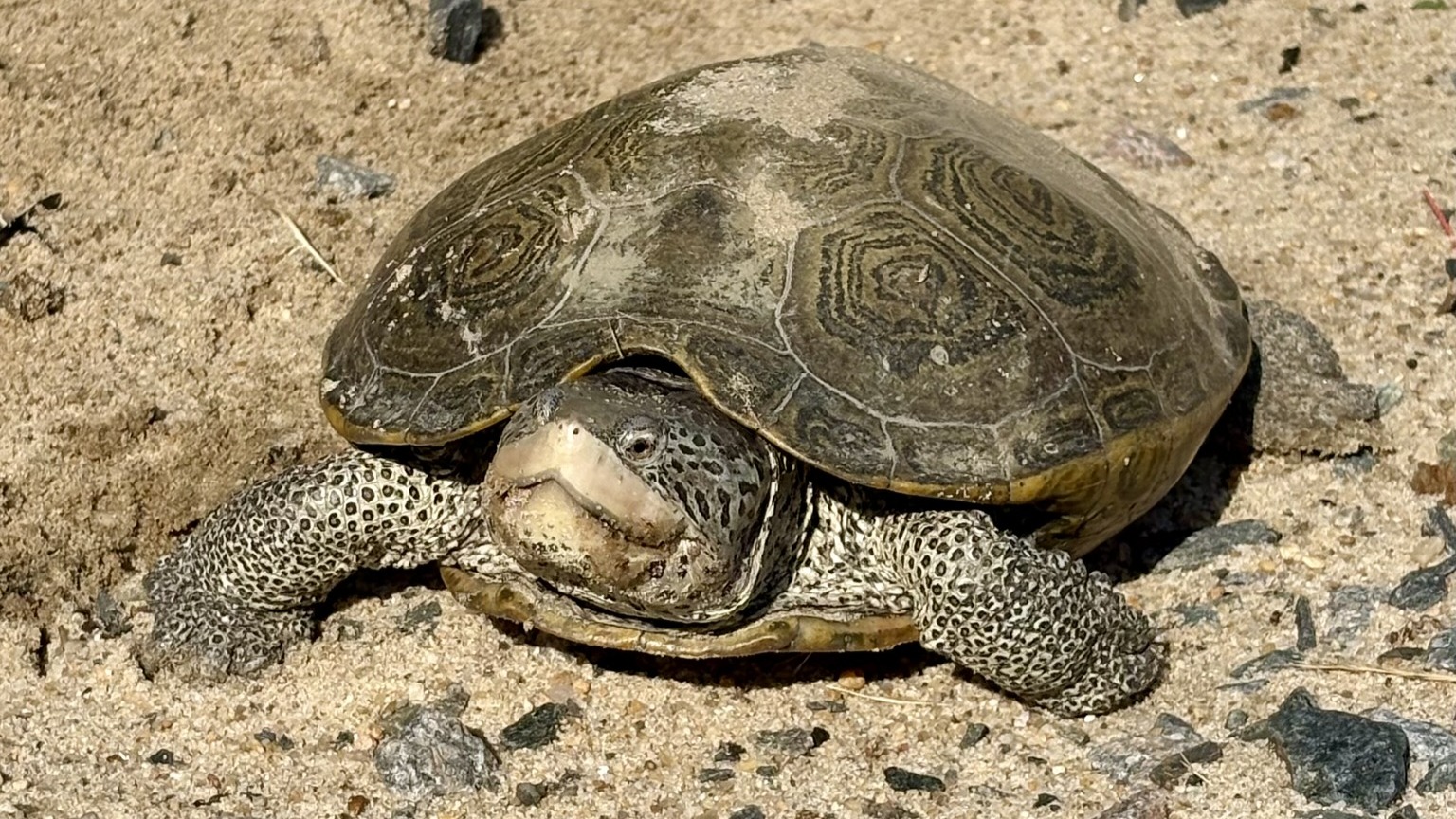 We have also helped to coordinate an excellent and knowledgeable committee to develop a plan for a barrier to keep diamondback terrapin out of the construction area. We consulted with a professor from the College of William and Mary, Virginia Department of Wildlife Resources staff, and the Wetlands Institute in New Jersey to develop a plan for a barrier to prevent diamondback terrapin from entering the excavation and construction area. This barrier system has been used effectively on the Eastern Shore and on the New Jersey shore to keep terrapin off roadways and safe from cars. We have confidence in this system but will also be monitoring it regularly throughout the construction period.
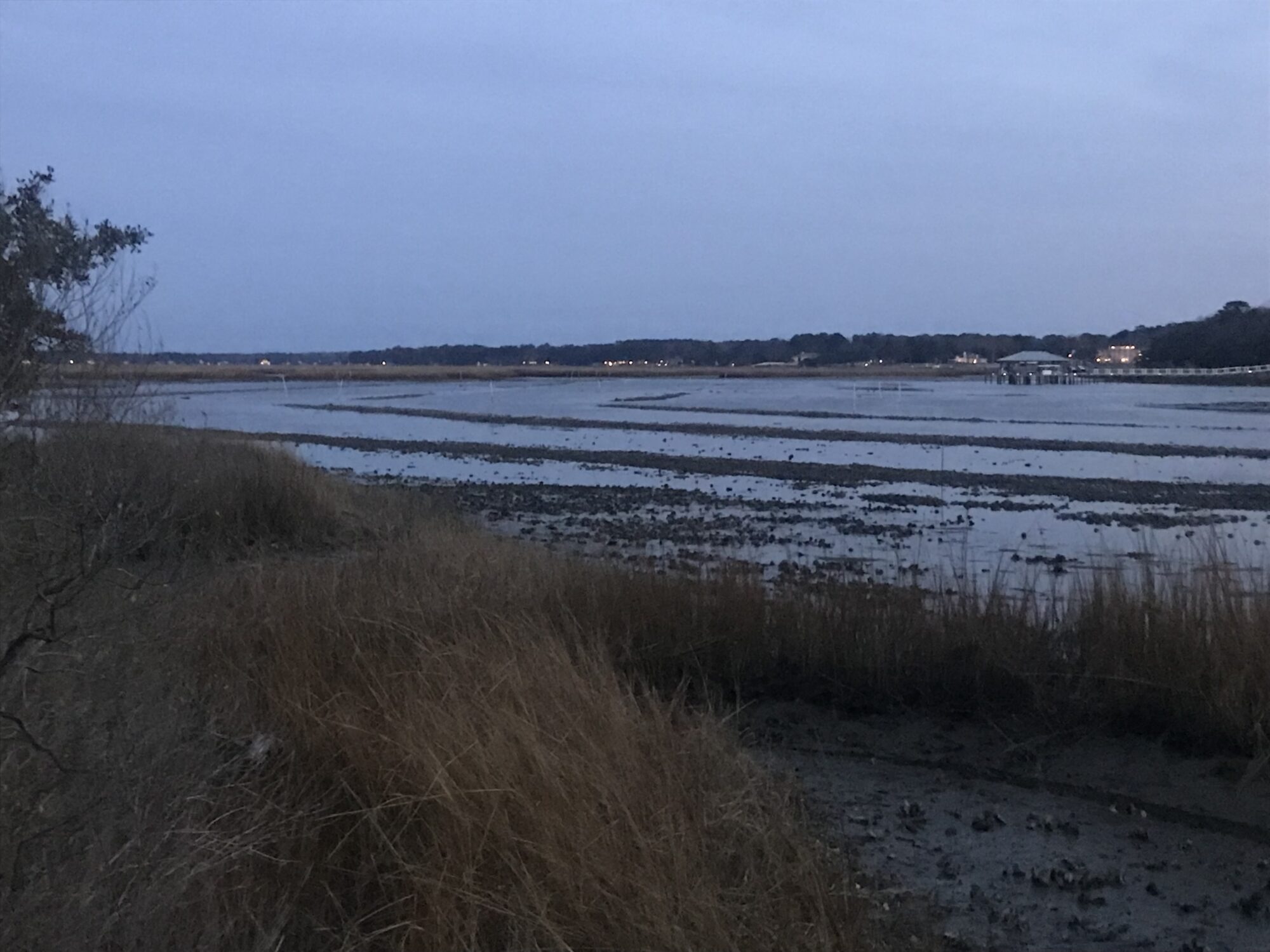 As you know, there is a very healthy oyster population in Pleasure House Creek including on the 11-acre reef that was completed only three years ago by LRNow and CBF. We are committed to protecting the oysters in the creek from any sediment runoff from this construction. We will soon have a page on our website devoted to water quality monitoring in Pleasure House Creek including current, or baseline, monitoring of water clarity, also called turbidity. Throughout the construction period, we will monitor turbidity and post those results for you to see on our website.
There are still a few questions for which we are seeking answers including the plans for the trees that are removed and the plans for the sand and other dredge material that is excavated from the site. We are working on getting answers to those questions and will continue to keep you informed as the project progresses.
Thanks again to everyone who came out to help remove the transplantable trees and grasses.
If you have been to Pleasure House Point recently, you may know that parts of the perimeter trail are currently closed. The ditch that goes from the end of Marlin Bay Drive to Pleasure House Creek is being widened to allow water to flow into the new wetland. The storm pipe under the trail is being removed and will be replaced with a pedestrian bridge similar to the existing pedestrian bridge on the trail to the east. The trail will be reopened as soon as this work is completed.
We regularly monitor water quality in Pleasure House Creek. Right now, we are especially interested in the turbidity, or cloudiness, of the water. If sediment is running off from the construction area, it will increase turbidity and potentially damage the thriving oyster population in the creek. Any increases will be reported to the city and the contractor so that more measures can be employed to prevent sediment runoff. The water quality monitoring data is available on our LRNow website here.
Another species we are monitoring are the diamondback terrapins who nest at Pleasure House Point starting mid-May and continuing through the summer. They prefer the sandy areas to the east of the construction site and are frequently found under the Brock Environmental Center building. Barriers have been installed between the water and the construction area to prevent them from entering the construction area. We are working with a William and Mary professor to monitor terrapin activity at Pleasure House Point and will have that information available on our website soon.
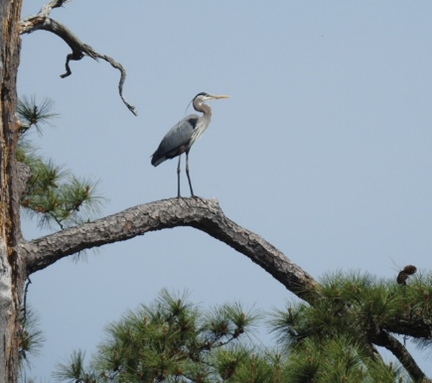
I hope you are still enjoying the wooded area at Pleasure House Point even while the construction is underway. The photos below are from our Bird Walk at Pleasure House Point on May 17, 2025.